Faces and traditional headwear
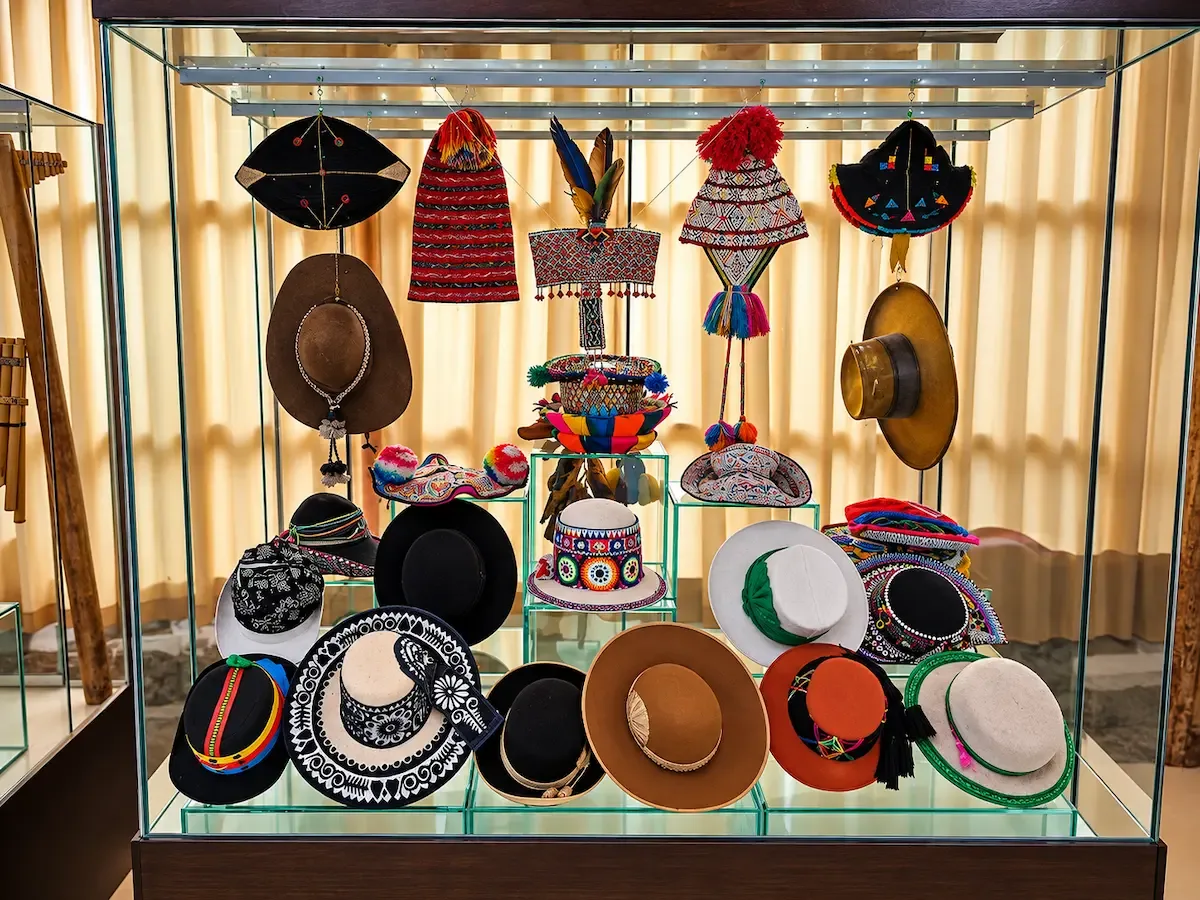
Embroidered Cusco monteras, fine wool chullos, straw and felt hats, and Amazonian feather crowns. The display case’s infographic explains the social meaning of each headdress by region.
Memory, Science, Worldview
A tour through the legacy of ancient Peru and its living traditions, just steps from the dining room.
The museum
The Willkauta Museum is a cultural space dedicated to preserving, sharing and renewing appreciation for the legacy of ancient Peru and its living traditions. Its collection brings together original pieces, reproductions made by the museum itself and scale replicas, arranged in themed display cases and accompanied by panels and infographics on history, Andean science, biodiversity and the contribution of Peruvian civilizations to the world.
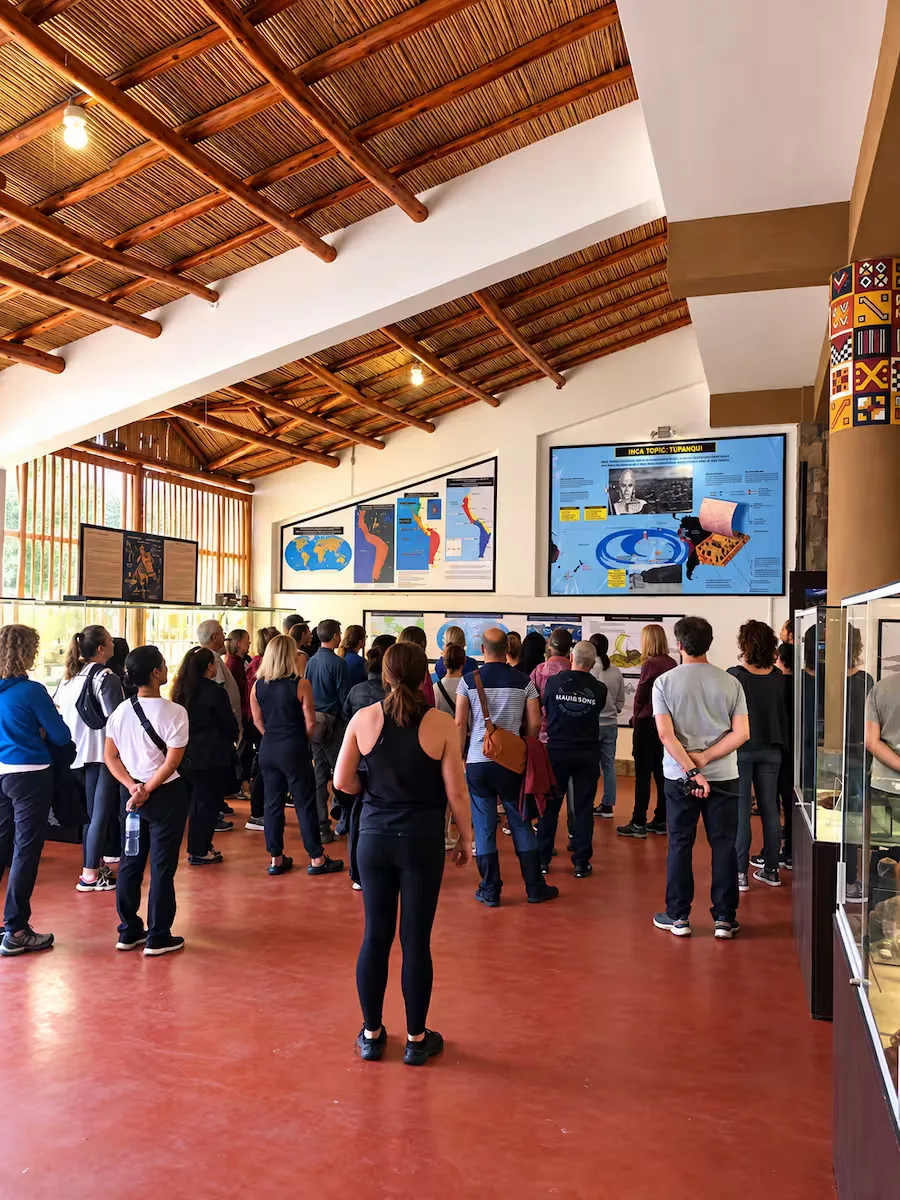
The visit takes 40 to 60 minutes and is scheduled before or after lunch, as part of the stop in Marangani. The tour is self-guided: each display case and each panel speaks for itself, and every traveler moves at their own pace. If you are traveling with a group, arrange the timing with us so there is time to have lunch and explore the museum without rushing.
Theme 1, Identity
The traditions still present across Peru’s coast, highlands and rainforest.
Embroidered Cusco monteras, fine wool chullos, straw and felt hats, and Amazonian feather crowns. The display case’s infographic explains the social meaning of each headdress by region.
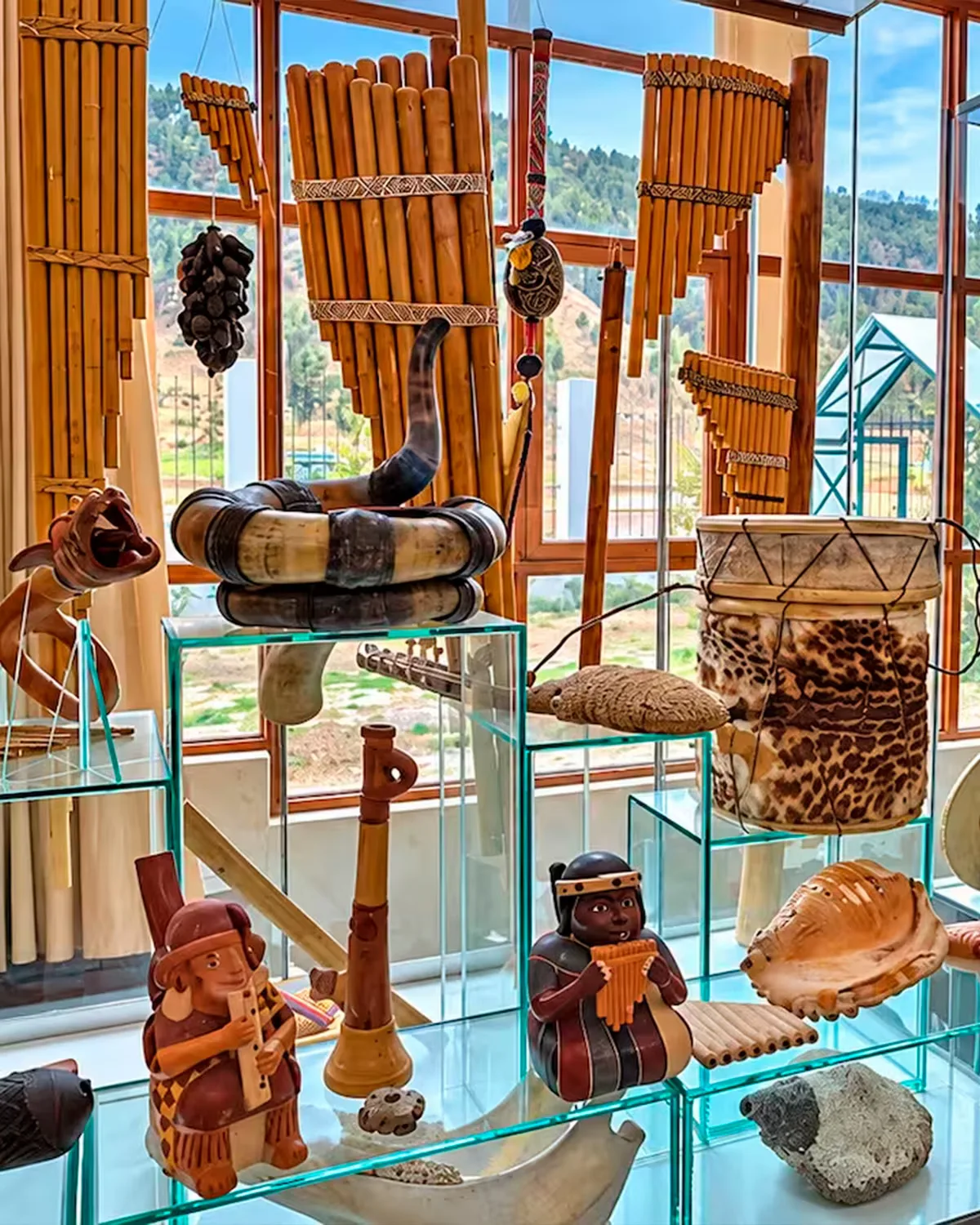
Charango, quena, panpipes, pututo, Peruvian cajón, tinya and the Cajamarca clarín: the origin of each instrument and its use in the ceremonies and festivals of the Andes, the Amazon and the coast.
Theme 2, Science
How Andean peoples farmed the highlands, kept the state’s records and sailed the ocean.
Cross-section models of the terraces and of the waru waru (raised fields) system, alongside farming tools such as the chaquitaclla, the Andean foot plow, and wooden hoes with leather bindings.
The organization of Tahuantinsuyo through its recording and calculation tools: a quipu on display, the work of the quipucamayoc and the yupana, the Inca calculator.
Scale models of log rafts with sails and of totora reed boats, and the account of the Pacific expeditions that the chronicles attribute to the Inca Túpac Yupanqui.
Theme 3, Art and ritual
The techniques and objects through which pre-Hispanic cultures expressed their view of the world.
Large-format ceremonial tapestries with geometric tokapus, anthropomorphic deities and weaving techniques that made pre-Hispanic textiles some of the most complex in the ancient world.
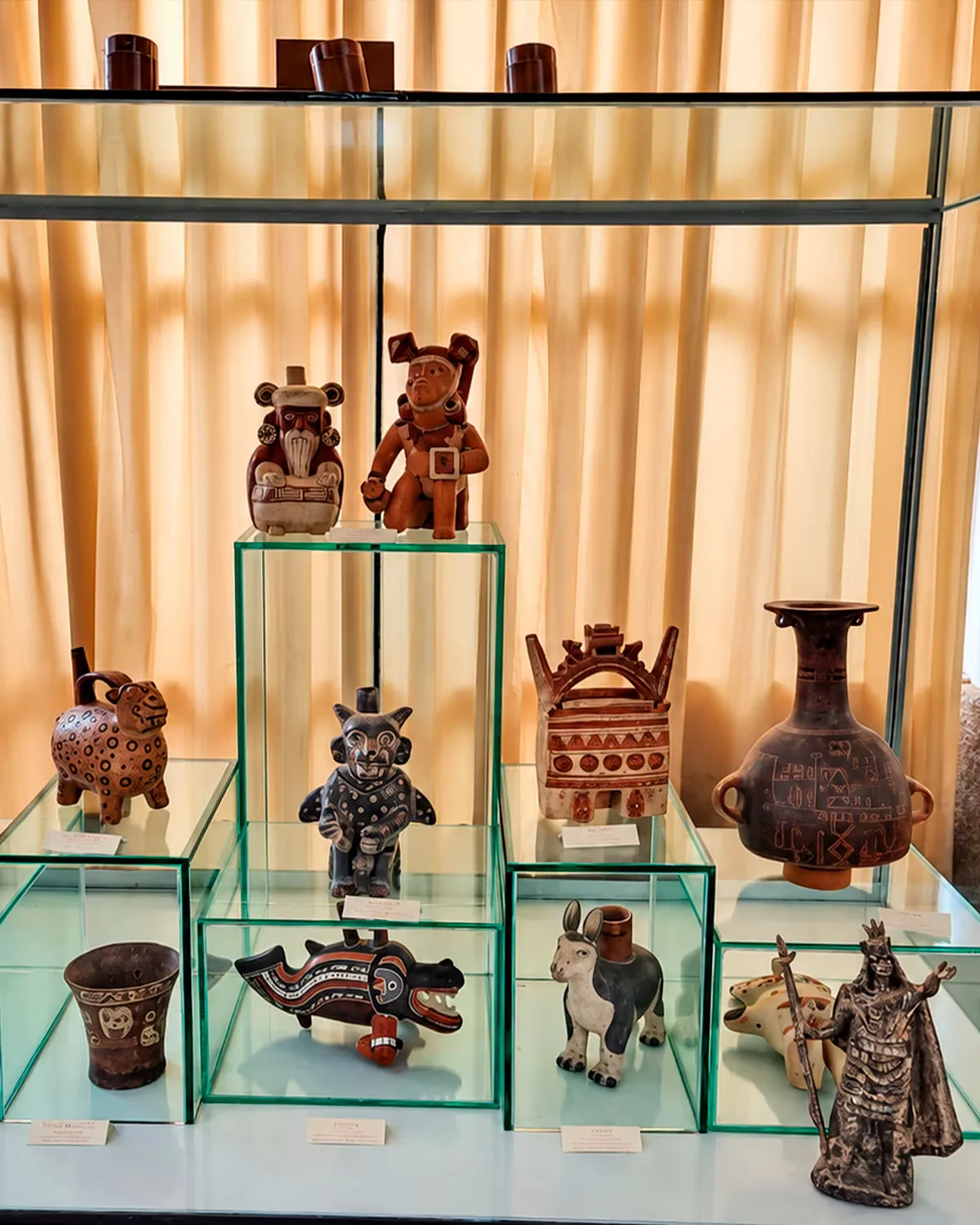
Pieces from different cultural horizons: stirrup-spout vessels, zoomorphic ceramics, ceremonial keros of clay and wood, and ritual objects.
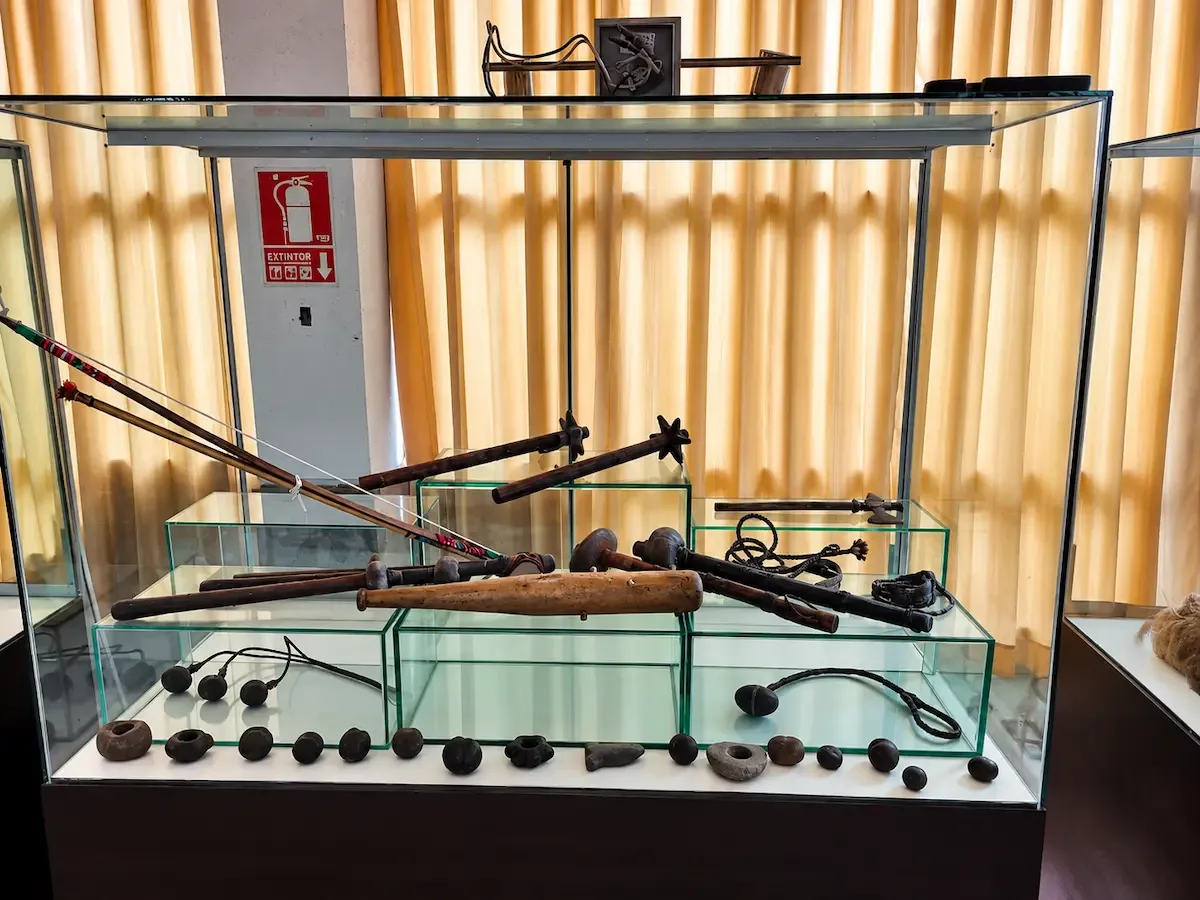
Star-headed maces of stone and metal, bolas (liwi), slings (warakas), spears and bows: the weapons of pre-Columbian defense and hunting.
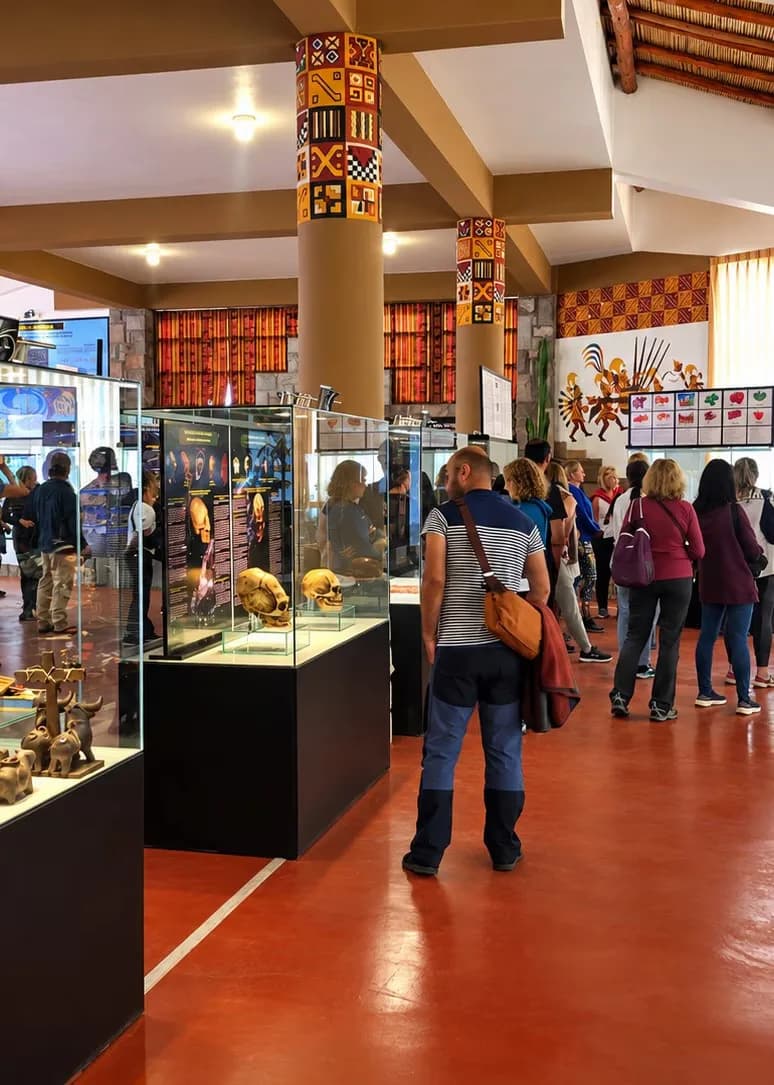
Pre-Inca skulls with artificial cranial deformation and trepanations, and panels that compare Andean monumental architecture, astronomy and mummification with those of other great civilizations.
Theme 4, Worldview
The relationship between the cosmos, the earth and the foods that Peru gave the world.
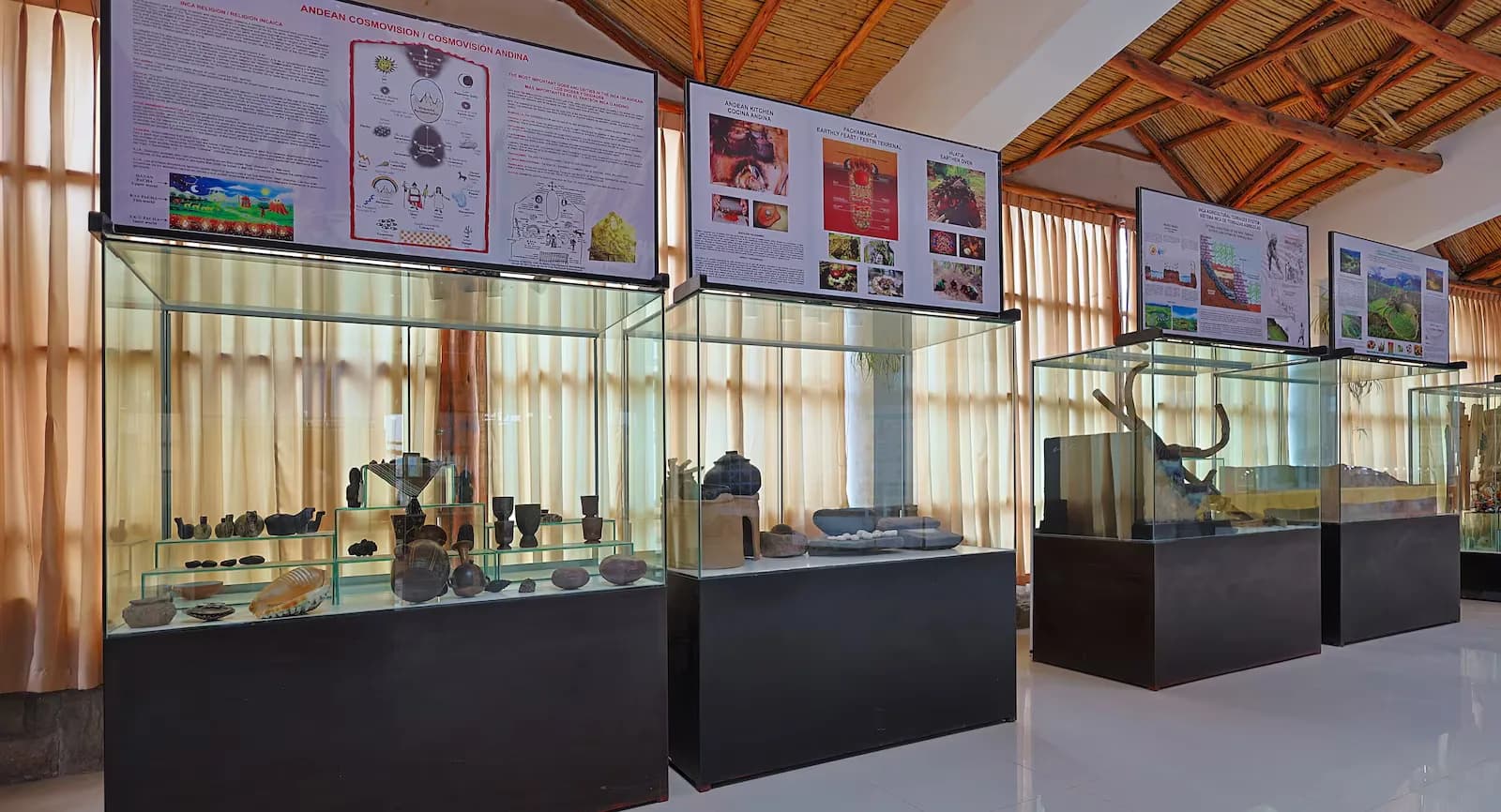
The three worlds (Hanan Pacha, Kay Pacha and Uku Pacha), the life force, or camaquen, and the guardian deities: Viracocha, Inti, Pachamama, Illapa and Mamacocha, according to the diagram by the chronicler Juan de Santa Cruz Pachacuti Yamqui.
Pachamanca and huatia, ancient techniques for cooking underground: the use of hot stones, the order of the layers and their festive and ritual meaning.
Discover our cuisineKey species of Peru’s ecosystems and their symbolism: the spectacled bear (ukumari), the Tumbes crocodile, the anaconda or amaru, associated with the world below, and the giant frog of Lake Titicaca.
A map of how the world’s diet changed after 1492: the products native to the Americas, such as potatoes, corn, cacao and chili peppers, and the species that arrived from other continents.
The experience
Each display case has its own infographic above it, so you can instantly compare the piece with its historical reconstruction and its role in society. Wall panels round out the tour, covering geography, food, biodiversity and worldview.
That is why Willkauta works for school groups as well as for Peruvian and international travelers.
Message us on WhatsApp to include the museum visit in your group’s stop and coordinate the timing with lunch.
Message us on WhatsApp (opens in a new tab)